Beyond the Battlefield: How Extremist Networks Are Exploiting Online Gaming to Target Children
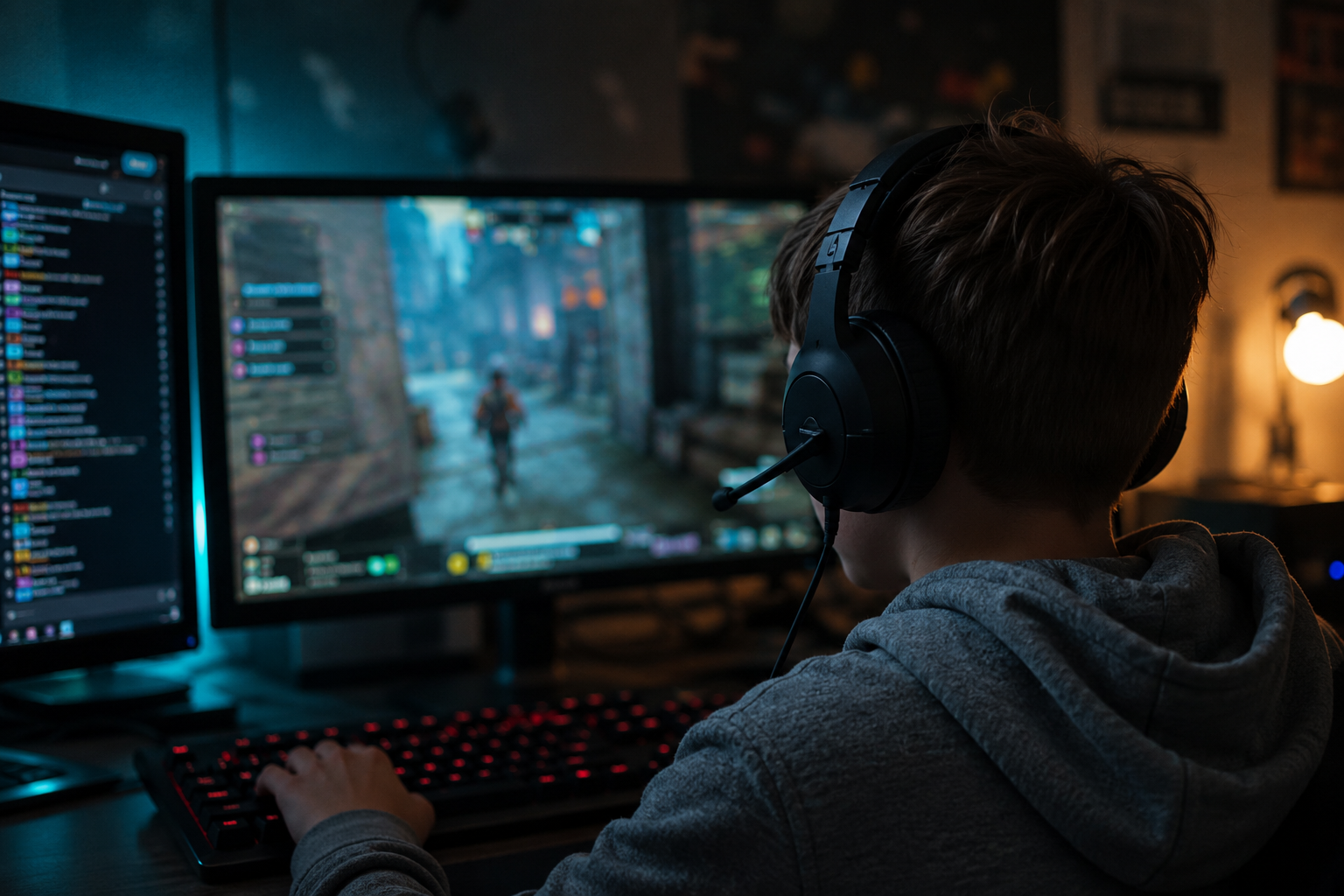
For many parents, video games are seen as entertainment, a way for children to relax, socialize, and develop problem-solving skills. Millions of young people log into gaming platforms every day to compete, build virtual worlds, and connect with friends across the globe.
But these same digital spaces have increasingly become fertile ground for extremist groups seeking to recruit, radicalize, and manipulate children.
Gaming is no longer just about play. It has become a social ecosystem in which voice chats, private messaging, live streaming, online communities, and user-generated content enable people to form relationships that often extend far beyond the game itself. Unfortunately, extremist actors have recognized this opportunity and are adapting their tactics accordingly.
Why Gaming Platforms?
Unlike traditional social media, gaming environments are built on trust, teamwork, and repeated interaction. Players spend hours together completing missions, solving challenges, and communicating in real time.
This creates ideal conditions for grooming.
Recruiters rarely begin with extremist ideology. Instead, they build friendships. They offer praise, mentorship, gaming tips, gifts, or simply companionship to children who may be isolated, bullied, or seeking a sense of belonging. Over weeks or months, conversations gradually shift from gaming to politics, identity, discrimination, conspiracy theories, or hate-filled narratives.
By the time extremist messaging becomes explicit, the relationship has often become deeply personal.
The New Face of Online Radicalization
Today’s recruitment is rarely dramatic.
Instead of public propaganda videos, recruiters increasingly rely on memes, coded language, humor, and gaming culture. Violent ideologies are often disguised as jokes or “edgy” content that slowly normalizes hate.
Private gaming servers, encrypted messaging applications linked from gaming communities, Discord channels, livestreams, and voice chats allow extremist networks to move conversations away from public moderation.
Children may never realize they are being groomed.
Some warning signs include:
- Sudden fascination with extremist symbols or slogans.
- Increasing hostility toward certain communities.
- Secretive online behavior.
- Participation in invitation-only gaming groups.
- Sharing violent memes or conspiracy content.
- Defending extremist personalities encountered online.
Not every child displaying these behaviors is being radicalized, but together they can indicate the need for supportive conversations.
Why Children Are Particularly Vulnerable
Adolescence is a period of identity formation.
Young people naturally seek belonging, purpose, recognition, and community. Extremist groups deliberately exploit these developmental needs by offering simple answers to complex problems, promising status, friendship, and a sense of mission.
Gaming communities can amplify this effect because achievements, teamwork, and shared identities are already central to the player experience.
Children who experience loneliness, social exclusion, family instability, discrimination, or mental health challenges may be particularly susceptible, not because they are weak, but because recruiters are skilled at identifying emotional vulnerability.
Platforms Cannot Solve This Alone
Gaming companies have significantly improved content moderation over recent years, investing in AI detection systems, trust and safety teams, reporting tools, and community standards.
However, extremist actors evolve quickly.
They migrate between platforms, create new accounts, use coded language, and exploit voice communications that remain difficult to moderate at scale.
Effective prevention, therefore, requires collaboration rather than isolated action.
Building a Collaborative Response
1. Gaming Platforms
Gaming companies should continue strengthening proactive safety measures by:
- Detecting coordinated extremist behavior.
- Improving the moderation of voice and text communications.
- Investing in child safety by design.
- Making reporting tools easier for young users.
- Sharing threat intelligence with trusted partners where legally appropriate.
- Conducting transparency reporting on extremist content.
Safety features should be easy for children to understand and use.
2. National Hotlines
Online safety hotlines provide an essential bridge between users, platforms, and authorities.
They can:
- Receive reports from children, parents, teachers, and gamers.
- Assess whether the content indicates grooming or radicalization.
- Coordinate rapid referrals to appropriate platforms.
- Preserve evidence where necessary.
- Provide guidance and psychosocial support to affected families.
- Identify emerging recruitment trends before they become widespread.
Many families simply do not know where to report extremist grooming when it occurs outside traditional social media.
3. Law Enforcement
Law enforcement agencies play a critical role when extremist activity crosses into criminal conduct.
Their responsibilities include:
- Investigating organized recruitment networks.
- Disrupting extremist communities targeting minors.
- Working with international partners because recruitment often crosses borders.
- Collaborating with digital platforms through lawful information-sharing mechanisms.
- Supporting child protection services where young people have been exploited.
Importantly, children who are targeted should primarily be treated as victims requiring protection rather than punishment.
4. Schools and Parents
Digital literacy must evolve beyond cyberbullying and online scams.
Children should also learn:
- How online grooming works.
- How extremist groups manipulate emotions.
- How algorithms can reinforce harmful content.
- How to critically evaluate information.
- Where to seek help if online interactions become uncomfortable.
Parents do not need to become gaming experts. Open, non-judgmental conversations about online experiences are often more effective than surveillance alone.
A Shared Responsibility
Protecting children from online extremism requires an ecosystem response.
Gaming platforms possess technical capabilities.
Hotlines provide trusted reporting pathways.
Law enforcement investigates criminal networks.
Schools build resilience.
Parents foster trust.
Civil society organizations deliver education and early intervention.
When these actors operate independently, gaps emerge that extremist groups readily exploit. When they collaborate, those gaps begin to close.
Looking Ahead
Gaming should remain what it was intended to be: a place for creativity, friendship, competition, and fun.
As digital environments become increasingly central to childhood, protecting those spaces is no longer optional; it is a child protection imperative.
The challenge is not to make children fear technology, but to ensure that the digital worlds they inhabit are as safe as the physical ones we work so hard to protect.
Online safety is no longer just about cybersecurity. It is about safeguarding children’s identities, relationships, and futures from those who seek to weaponize connection itself.
This version is suitable for publication in a newspaper, organizational blog, or policy magazine and takes a child protection rather than a sensational approach.