Protecting Children in Digital Election Spaces
Background and Context
Across Africa, recent election cycles have demonstrated a clear shift toward digitally driven political processes. Countries such as Ghana, Nigeria, Kenya, Senegal, Sierra Leone, and the Democratic Republic of Congo have all concluded national elections in which social media platforms, messaging applications, and data-driven campaign strategies played a central role in political mobilization, voter engagement, and public discourse.
These election periods were marked by intensified online political messaging, the rapid spread of misinformation, heightened concerns about digital surveillance, and increased online harassment. In many contexts, election-related content circulated widely beyond intended adult audiences, reaching children through shared devices, family WhatsApp groups, community networks, and algorithmically promoted social media feeds.
While regional and national debates focused largely on election integrity, disinformation, and political violence, the impact of digital election environments on children received limited attention. Yet across these countries, children were exposed to graphic political content, polarizing narratives, and the unauthorized sharing of their images and data often without safeguards, consent, or recourse.
As Uganda enters its own election cycle, it does so within the broader African digital election landscape. The challenges observed in countries that have recently completed elections offer important lessons: without deliberate child-centred digital protections, election technologies and platforms risk causing lasting harm to children’s safety, privacy, and civic development.
Uganda’s experience, therefore, serves not only as a national concern but as a critical reference point for regional reflection and coordinated African policy action on protecting children in digital election spaces.
2. Children’s Presence in Campaigns: Uganda’s Reality
During recent political campaigns in Uganda, children were visibly present at rallies, roadshows, and campaign activities, sometimes wearing party colours, chanting slogans, or appearing in campaign imagery shared online. In many cases, this presence extended into the digital sphere, with children’s images, voices, and participation circulating widely on social media platforms.
While often normalized as community participation, this practice raises serious concerns related to child protection, consent, safety, and long-term digital harm, especially in politically charged environments.
3. Digital Platforms and the Impact on Children During Elections
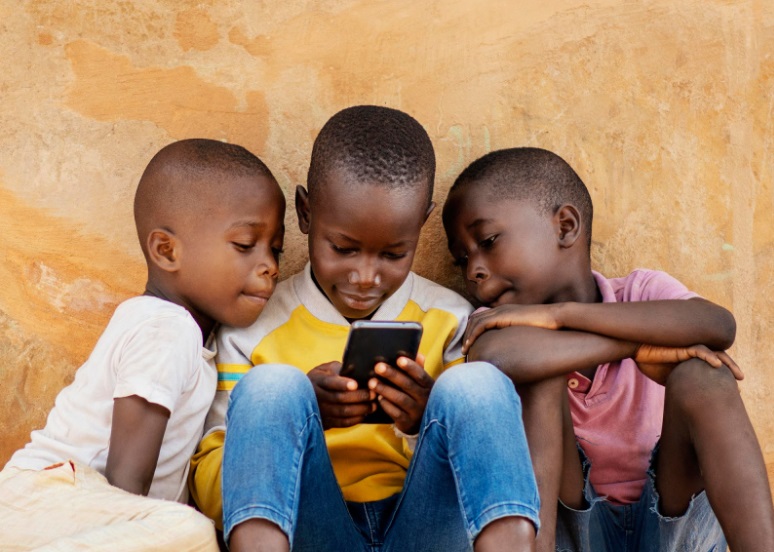
Digital platforms are the primary vector through which election-related content reaches children. Access often occurs through personal smartphones, shared family devices, school networks, and community WhatsApp groups.
Key Impacts
a) Exposure to Harmful and Polarizing Content
Children are exposed to graphic footage from rallies, hate speech, intimidation, and aggressive political rhetoric. Repeated exposure normalizes hostility and fear, shaping early perceptions of politics as dangerous rather than participatory.
b) Algorithmic Amplification and Manipulation
Election content is amplified by engagement-driven algorithms, not child-safety considerations. Political memes, propaganda, and emotionally charged narratives are repeatedly surfaced to young users without age-appropriate context or critical framing.
c) Data and Privacy Violations
Children’s images and personal data captured during campaigns are frequently shared online without informed consent. Once posted, this content creates permanent digital footprints, exposing children to profiling, misuse, or future harm.
d) Informal Digital Campaign Participation
In some instances, children are encouraged to manage social media pages, share campaign content, or appear in political videos. This exposes them to online harassment, surveillance, and political pressure while blurring the line between civic education and exploitation.
e) Online Harassment and Psychological Harm
Election periods often coincide with spikes in online abuse. Children and adolescents associated with politically active families or communities may experience cyberbullying, intimidation, and silencing, discouraging healthy expression and civic curiosity.
4. Uganda’s Legal and Policy Framework: Gaps and Opportunities
Uganda has legal instruments that can support child protection in digital election spaces, but significant gaps remain.
- The Data Protection and Privacy Act, 2019
Establishes principles of lawful, fair, and consensual data processing, including data relating to children. However, it does not explicitly regulate election-period digital campaigning, political profiling, or online dissemination of children’s images. - The Children Act (as amended)
Affirms the best interests of the child and protection from exploitation and harmful exposure—principles that apply equally online and offline. - Electoral Commission Guidelines and Codes of Conduct
Regulate campaign behavior and public order, but do not explicitly prohibit the physical or digital use of children in political campaigning, nor do they address child online safety during elections.
This regulatory gap enables the routine digital exposure of children during campaigns without accountability or remedy.
5. Why This Is a Continental African Issue
Uganda’s experience mirrors broader trends across Africa:
- Africa has the youngest population globally, with children and adolescents forming a significant share of digital users.
- Elections increasingly rely on digital platforms that lack child-centred safeguards.
- Weak protections risk socializing a generation into fear, hostility, misinformation, and political manipulation.
Organizations such as UNICEF consistently affirm that children’s rights apply online and offline, including during political and electoral processes.
6. Regional Policy Recommendations
For Electoral Management Bodies (EMBs)
- Integrate child online safety provisions into election guidelines and codes of conduct
- Explicitly prohibit the digital and physical use of children in political campaigns
For Governments and Data Protection Authorities
- Enforce child-specific data protection obligations during election periods
- Issue election-time guidance on lawful handling of children’s data and images
For Political Parties and Candidates
- Commit publicly to child-safe digital campaigning
- Refrain from mobilizing, profiling, or showcasing children for political gain
For Technology Platforms
- Apply enhanced safety and moderation measures for minors during elections
- Reduce algorithmic amplification of harmful political content accessible to children
For Civil Society and Media Coalitions
- Monitor, document, and report election-related digital harms affecting children
- Promote child-centred digital literacy, peace messaging, and accountability advocacy
7. Conclusion
Uganda’s election period underscores a wider African challenge: children are present in digital political spaces but absent from digital election protections. Safeguarding children online during elections is not only a child rights obligation, but it is also fundamental to building peaceful, inclusive, and resilient democracies across Africa.
If elections are increasingly digital, child protection must be digital too.